The Developmental Social Neuroscience lab investigates behavioral and neural mechanisms underlying social decisions and learning across development. Our particular focus is on neurodevelopment disorders. In current projects, we study social learning across neurotypes, with a focus on autism, and developmental stages. Our work is supported by the Simons Foundation for Autism Research (SFARI) and the National Institute of Mental Health (NIMH).
A Conversation with Dr. Rosenblau and Paul Wahlbeck, CCAS Dean
Learning About Others Across Development
We are researching how people learn about others (social learning). We are also investigating if this learning differs from learning non-social information.
An example of social learning involves thinking about other people’s preferences.
For example: what information would we use to predict whether someone you don’t know likes ice skating? Are we relying on our own preferences or on aggregated knowledge about similar others? Once we find out how much a person likes ice skating, we generalize to other similar information. Also, we investigate how social learning is implemented in the brain.
We can generalize this framework to investigate non-social learning. Instead of preferences, participants learn about item-features through similar trial-by-trial updating. We are investigating how existing knowledge representations (like categorizing objects, for instance) are shifted by learning about specific item-features (e.g., how colorful objects are).
Read a kid-friendly article about what we study here.

Social knowledge representations for learning
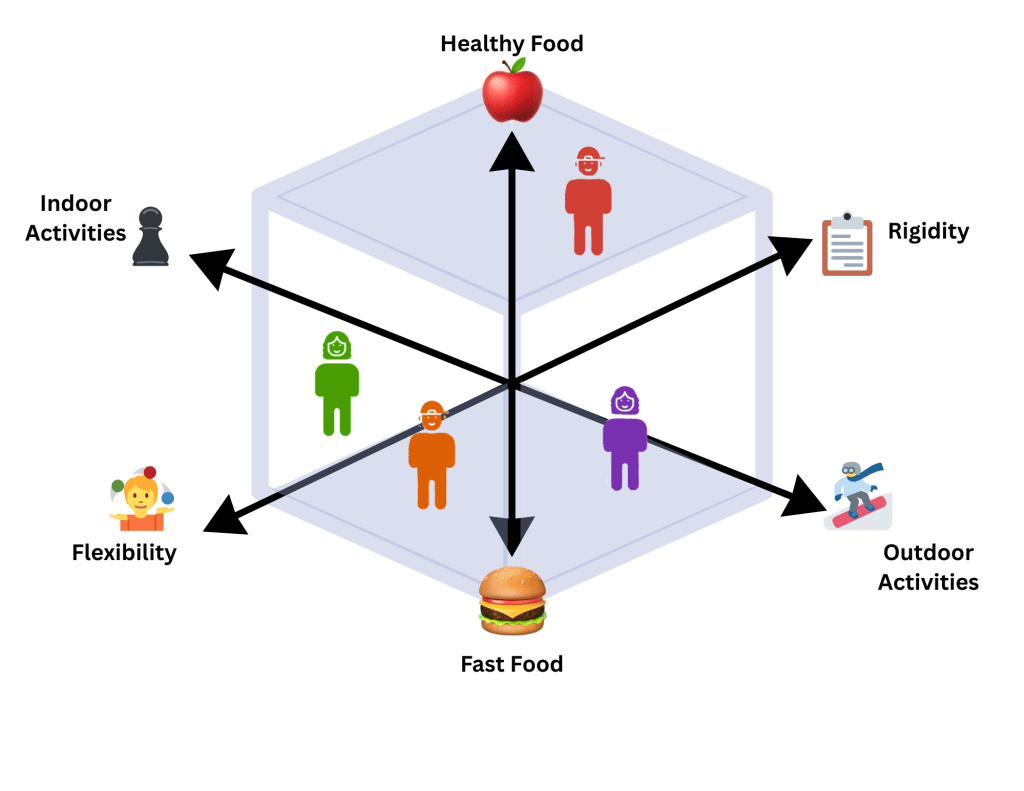
We are investigating the most important dimensions for summarizing traits and preferences for various categories of items. We look for how these dimensions inform social learning, meaning whether and how people reference these dimensions during learning. We also analyze how our brain encodes these knowledge dimensions. We explore if our brain uses the space that is spanned by certain knowledge dimensions during social learning. That is, we explore whether individuals place people in these knowledge spaces based on the constellation of their preferences or traits. We test how individuals navigate these spaces when thinking about others.
Learning in and for cooperation
We use strategic games and computational modeling approaches to describe how gathering information about a partner influences cooperation. We test whether these models differentiate between children with and without autism. We also test how people learn about others through cooperation.

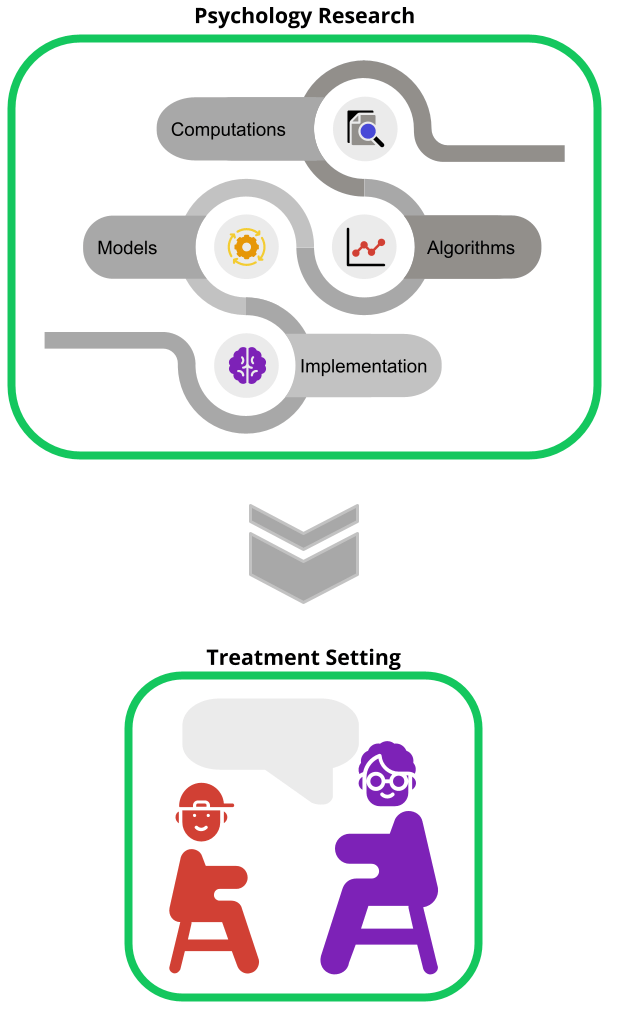
Can social learning in interactive games predict people’s social functioning in real life? Can it also help us develop treatment outcomes for people with social deficits?
The long-term goal of this research is to use this neurocognitive approach to inform the diagnosis of youth and adults with neurodevelopmental disorders. It aims to refine and individualize education and interventions.
 Developmental Social Neuroscience Lab